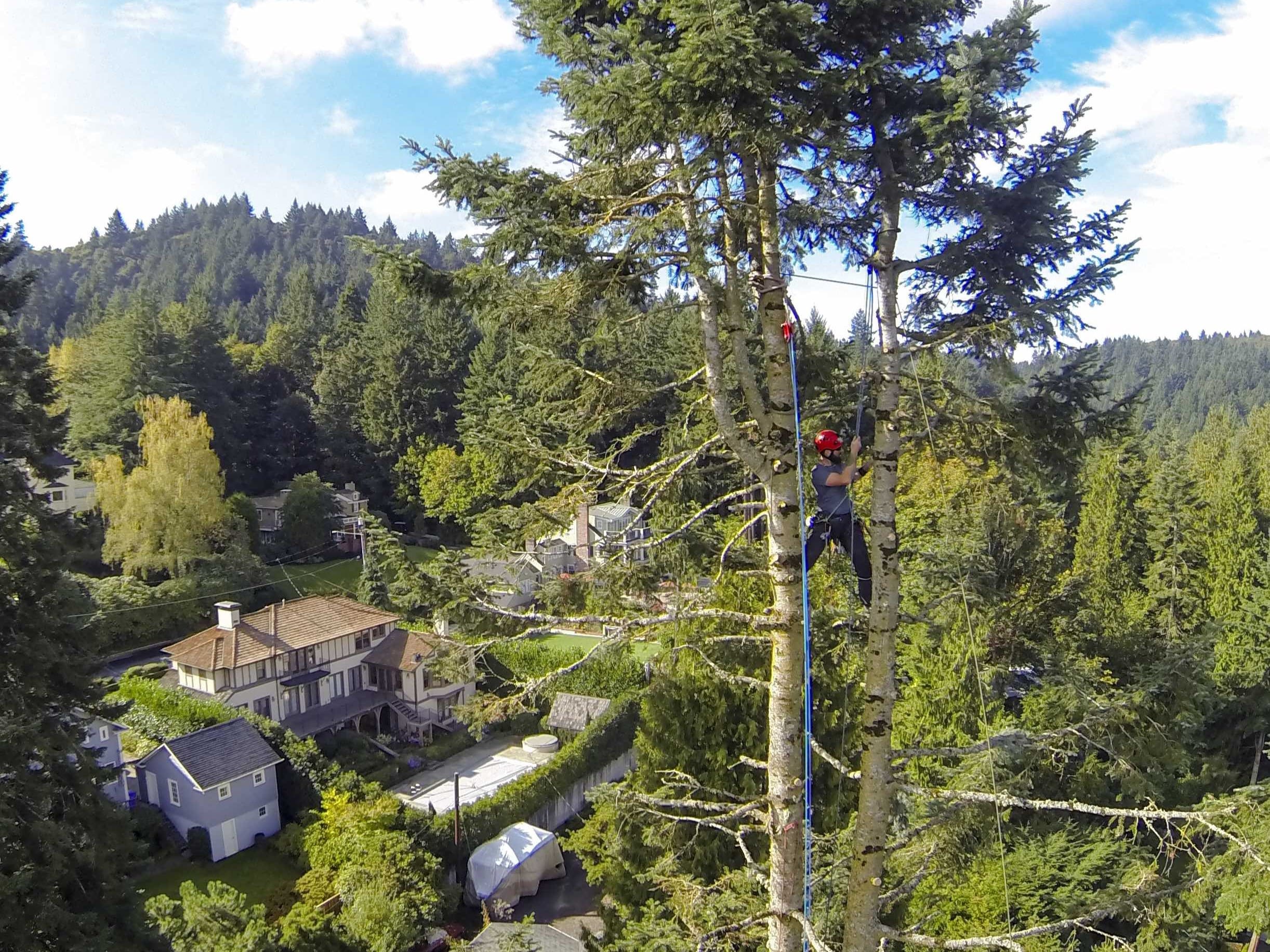
Living in Oregon means being surrounded by breathtaking natural beauty, including towering douglas fir trees. If you're lucky enough to have one (or several) in your yard, you already know how majestic and grounding these giants can be. But like any living thing, they need a little attention to stay healthy and safe, especially when they're mature and towering over your home.
So, how do you keep these gentle giants from becoming potential hazards? And how do you strike the right balance between enjoying your landscape and protecting your property? Our expert arborists will walk you through everything you need to know about coexisting peacefully and safely with mature Douglas firs right in your backyard.
The mighty douglas firs
Douglas firs aren’t technically “true” firs, but they are certainly beloved. Native to the Pacific Northwest, they can grow up to 300 feet tall in the wild and often live for hundreds of years. In residential yards, they typically max out at 80–120 feet, but that’s still no small feat.
These evergreens provide shade, shelter, and a sense of Oregon’s wild charm. But without regular care, they can also pose a risk to your property, especially during storms or high winds.
Mature trees have deep roots in your yard. They increase your home’s value, reduce air pollution, and help manage stormwater runoff. Not to mention the shade and privacy they provide. But maturity also means they’re taller, heavier, and more susceptible to age-related decline. They need more regular checkups and maybe a bit of extra help staying upright.
Identifying a healthy vs. unhealthy tree
A healthy douglas fir typically has:
- • Strong, full green needles
- • Evenly spaced branches
- • No visible fungus or rot at the base
- • Solid bark with no cracks or oozing sap
An unhealthy tree, on the other hand, may show signs like:
- • Thinning foliage
- • Dead or hanging limbs
- • Leaning trunk
- • Visible cracks, pests, or fungal growth
Catch these early, and you might save your tree and avoid a dangerous situation.
These are what you need to watch for
- • Sudden lean – A quick change in posture can signal root failure.
- • Mushrooms or fungus – Especially near the base, these could mean internal rot.
- • Cracks in the soil – Shifting roots may destabilize the tree.
- • Unusual sounds – Creaking in windy weather can indicate internal stress.
How tree roots affect your yard
The roots of a mature douglas fir can stretch out 1–2 times the height of the tree. That means they may be impacting your lawn, sidewalks, or even your foundation. They need space, moisture, and oxygen.
If you notice lifting concrete, dying grass, or clogged plumbing, your tree’s roots might be the culprit. A certified arborist can help assess root issues without harming the tree.
The role of professional tree inspections
Think of a tree inspection like an annual physical. At Oregon Tree Care, we can assess:
- • Tree health
- • Structural stability
- • Pest or disease activity
- • Risk of failure during storms
In Oregon, it’s smart to get your trees inspected every 1–2 years, especially if they’re close to your house or power lines.
Pruning for safety and longevity
As these trees extend their branches outward over time, increased weight at the end of their branches can create stress and lead to limb failure and structural instability. The solution? End-weight reduction pruning.
End-weight reduction pruning is a targeted method that selectively removes excess weight from the outer portions of branches, reducing strain and the risk of failures.
Benefits of end-weight reduction pruning:
- • Reduces risk of limb failure: By reducing the end-weight of outlying branches, we can decrease the likelihood of heavy limbs breaking during periods of snow, ice, high winds, or other natural causes.
- • Whole tree stabilization: Oftentimes, the forces that lead to whole tree failures are greatest at the top of the canopy. By making reductions of weight and wind resistance in the top 1/3rd of douglas fir canopies, we can lessen many of the known forces, contributing to whole tree failures.
- • Enhances tree longevity: Reducing branch stress promotes overall tree health by mitigating the potential of large failures, which can be very traumatic for a tree’s overall health. Our staff of trained professionals knows how to perform these procedures in a controlled manner, allowing your douglas firs to thrive for decades to come.
Dealing with storm damage
After a big storm, do a visual check:
- • Is the tree still standing straight?
- • Are there broken or hanging limbs?
- • Is the ground around the base cracked or lifted?
Call an arborist if anything looks off. It’s better to be safe than sorry!
Preventing fire hazards
While douglas firs are naturally fire-resistant, dry limbs and debris can still catch fire, especially during Oregon’s dry summers.
To reduce fire risk:
- • Clear fallen needles and branches
- • Maintain a defensible space around your home
- • Prune lower limbs to prevent fire from climbing upward
Oregon Tree Care to the Rescue!
When the iconic Doerner Fir went ablaze, our very own Damien Carré answered the call — climbing 280 ft up the trunk to extinguish the fire and help install a sprinkler system to protect the tree from reigniting.
Discover his story on OPBSupporting local wildlife safely
Douglas firs are a haven for:
- • Birds (like woodpeckers and owls)
- • Squirrels
- • Insects and pollinators
While it’s wonderful to support wildlife, keep nests and burrows away from structural areas like gutters or eaves. Use birdhouses or feeders to draw them away from the home itself.
Soil, drainage, and tree stability
Healthy soil = stable trees. Poor drainage or compacted soil can weaken roots. To support your douglas fir:
- • Avoid piling mulch or soil around the base
- • Make sure water flows away from the roots
- • Aerate compacted soil in heavy-traffic areas
When (and why) to remove a douglas fir
Sometimes, removal is the safest option. Consider removal if:
- • The tree is dead or dying
- • It’s leaning significantly
- • It’s too close to your house or septic system
- • It has major root or trunk decay
It’s never an easy choice, but safety has to come first. We can offer alternatives when possible or carry out the removal safely.
Hiring a certified arborist in Oregon
Look for:
- • ISA certification (International Society of Arboriculture)
- • Experience with douglas firs and local conditions
- • Clear estimates and insurance
Living in harmony with your trees
Having mature Douglas firs in your yard is a gift, but it comes with responsibility. With a little knowledge, regular care, and the help of skilled professionals, you can enjoy their beauty without worry.
Treat your trees with respect, give them the care they need, and they will stand tall and strong for years to come. Let Oregon Tree Care help you protect what matters. We’re experts in preserving mature trees, managing risk, and giving you peace of mind. Whether you need an inspection, pruning, or long-term health planning, we’re here for you. Call us at (503) 929-9437 today and give your trees the expert care they deserve.