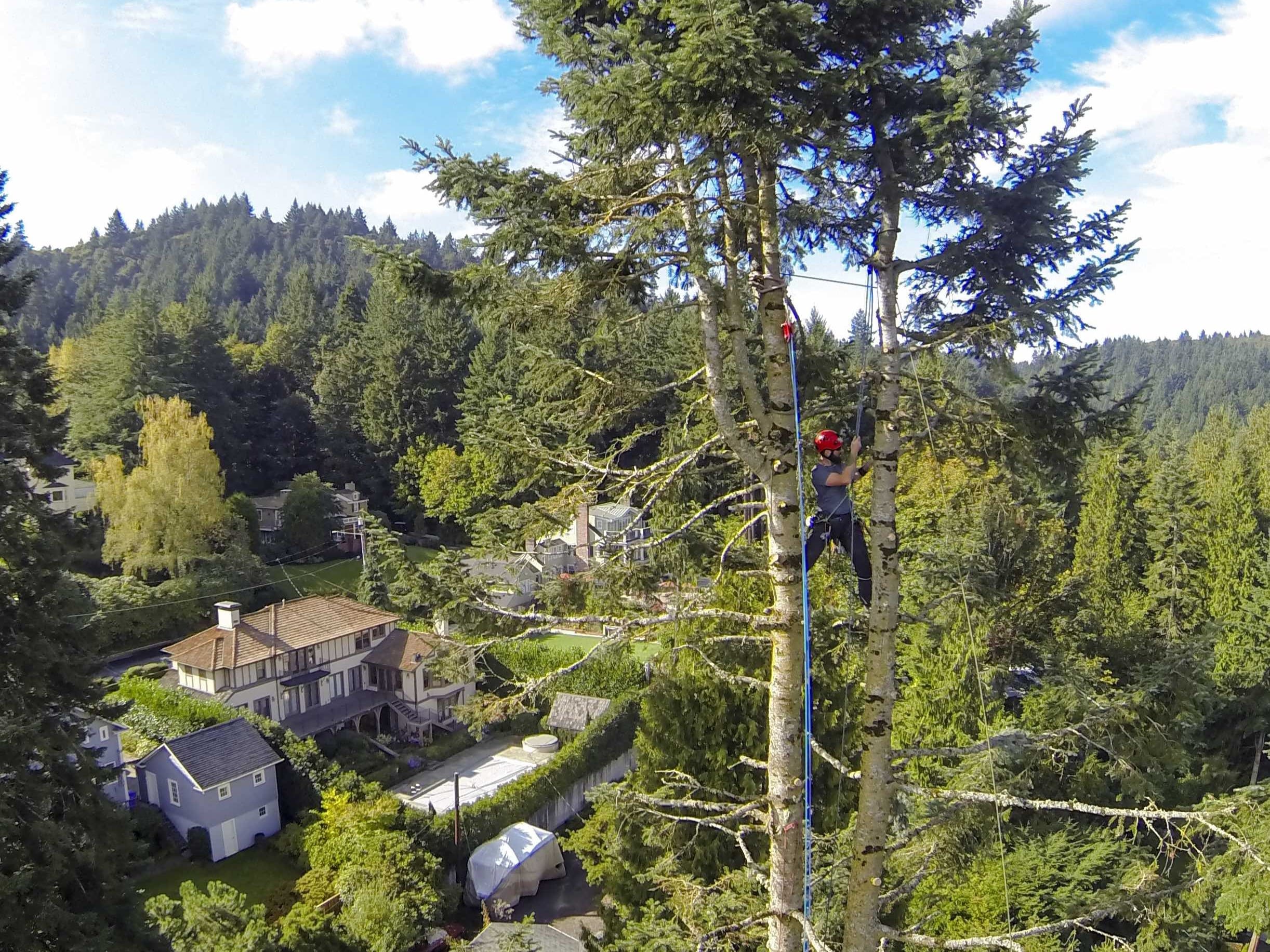
When most people see a dead tree, they think it’s time to cut it down and haul it away. But here’s something surprising: a dead tree can often support more life than a living one. These standing dead or dying trees, known as habitat snags, play an essential role in Oregon’s ecosystem. They’re like apartment complexes for wildlife — offering food, shelter, and nesting spots to countless creatures.
At Oregon Tree Care, we believe in honoring a tree’s full life cycle. Instead of removing older or declining trees entirely, we can transform them into safe, standing habitat snags. The result? Your yard becomes a haven for biodiversity while also keeping your property safe and beautiful.
What are habitat snags?
Habitat snags are standing dead or dying trees that have been carefully modified to eliminate risks while leaving behind a valuable natural resource. Think of them as nature’s recycling bins; instead of being wasted, they continue serving the ecosystem by providing shelter and food to countless species.
Rather than removing a tree entirely, we can trim and reshape it into a snag that’s stable, safe, and ecologically useful.
Why dead trees matter more than you think
It may seem counterintuitive, but a dead tree can sometimes be more alive than a living one. A healthy tree mainly supports its own growth, but once it dies, it becomes a resource for hundreds of other organisms.
For example:
- • Birds nest in cavities formed in the wood.
- • Bats use the crevices as roosts.
- • Insects thrive in decaying bark.
- • Fungi break down tough wood fibers, cycling nutrients back into the soil.
In short, a dead tree isn’t the end of life; it’s the beginning of a whole new chapter.
The role of insects and microorganisms
Dead wood is a paradise for insects like beetles, ants, and termites. While some people see them as pests, these creatures are essential. They break down wood fibers, create tunnels that other animals use, and feed larger predators like birds.
Then there are the microorganisms and fungi. These unseen workers slowly decompose wood, returning essential nutrients like nitrogen and carbon to the soil. It’s a closed-loop system — nothing goes to waste.
Snags and Oregon’s unique ecosystem
Oregon’s landscapes, from forests to backyards, are rich with wildlife. But as development increases, natural habitats shrink. By creating snags, homeowners can restore some of that lost habitat.
Imagine your backyard becoming a mini wildlife reserve: a safe place where owls hoot, woodpeckers drum, and butterflies feed. Every snag you preserve contributes to the broader health of Oregon’s ecosystem.
How habitat snags improve soil health
As snags slowly decompose, they act like slow-release fertilizer. Nutrients locked inside the wood are gradually returned to the earth, enriching the soil.
This process benefits:
- • Native plants that thrive in healthier soil.
- • Fungi networks that spread and support trees nearby.
- • Insects and worms that further break down organic matter.
Remember, a snag doesn’t just stand tall; it improves the ground beneath it, too.
The cost-effective alternative to full removal
Completely removing a dead tree can be expensive, especially if heavy equipment is needed. Turning it into a snag is often cheaper and faster.
Instead of paying for complete stump grinding and hauling, you invest in a service that’s both budget-friendly and eco-friendly.
Safety considerations in creating a snag
Of course, leaving a dead tree untouched can sometimes pose risks, especially if it’s unstable or near structures. That’s why professional assessment is key.
At Oregon Tree Care, we evaluate:
- • The location of the tree.
- • The structural stability of the trunk.
- • The proximity to homes, walkways, or power lines.
If safe, we modify the tree into a snag. If not, we’ll recommend safe alternatives. Our process includes:
- • Assessment – Checking for hazards and deciding the best approach.
- • Modification – Cutting branches and adjusting the height to make it stable.
- • Preservation – Leaving behind a safe, sturdy snag for wildlife.
This ensures your property remains safe while also supporting biodiversity. Not every dead tree should become a snag. Some guidelines we follow:
- • The tree is not leaning dangerously.
- • It’s not too close to your home or driveway.
- • It’s stable enough after modification.
If these conditions are met, you’ve got a perfect candidate for a snag.
The beauty of dead trees: aesthetic value
Surprisingly, snags can be visually striking. They add character and texture to a landscape, creating a natural, rustic aesthetic. Some homeowners even design their gardens around them, using snags as focal points or supports for climbing plants.
Instead of being seen as an eyesore, a snag can be a conversation piece and a symbol of your commitment to nature. Over the years, snags:
- • Support multiple generations of wildlife.
- • Improve soil health continuously.
- • Reduce landscaping costs by avoiding full removal.
- • Offer unique beauty to your property.
Snags are a long-term investment in nature.
How you can support local wildlife
Besides preserving snags, you can help wildlife by:
Planting native trees and shrubs
Native plants are already adapted to Oregon’s climate and soil, which makes them easier to grow and maintain. More importantly, they provide the exact type of food, shelter, and nesting opportunities that local birds, pollinators, and mammals depend on. By planting species like Oregon grape, vine maple, or red flowering currant, you’ll be offering both beauty and function in your landscape.
Providing water sources
Just like us, animals need fresh water to survive. A simple birdbath, shallow dish, or even a small pond can become a lifeline for birds, butterflies, and beneficial insects. Change the water regularly to keep it fresh and prevent mosquitoes, and you’ll soon notice your yard buzzing with activity.
Avoiding chemical pesticides
Many pesticides harm not only the pests you’re trying to control but also bees, butterflies, and other essential pollinators. Instead, try natural alternatives like companion planting or introducing beneficial insects such as ladybugs. By cutting out harsh chemicals, you’ll keep your yard safer for wildlife and healthier for your family, too.
Building nesting boxes
Not every species can find the right cavity in a snag, but you can help fill the gap by installing nesting boxes. These are especially useful for species like bluebirds, chickadees, or owls that need safe, enclosed spaces to raise their young. Nesting boxes can be tailored to specific species, making your yard even more attractive to them.
Giving dead trees new life
Dead trees don’t have to mean dead ends. With habitat snags, they become vital homes, food sources, and nutrient banks for Oregon’s ecosystem. By choosing this option, you’re not only saving money and improving your property, you’re also helping keep Oregon’s wildlife thriving!
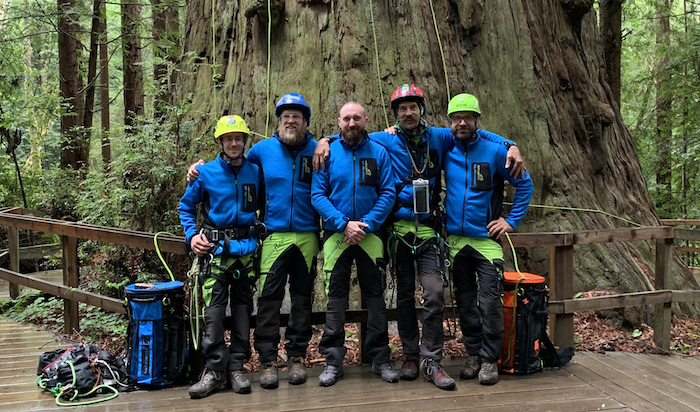
At Oregon Tree Care, we’re passionate about supporting trees at every stage of their life cycle. Call us at (503) 929-9437 today and let us give your trees and your local wildlife a second chance at life.